
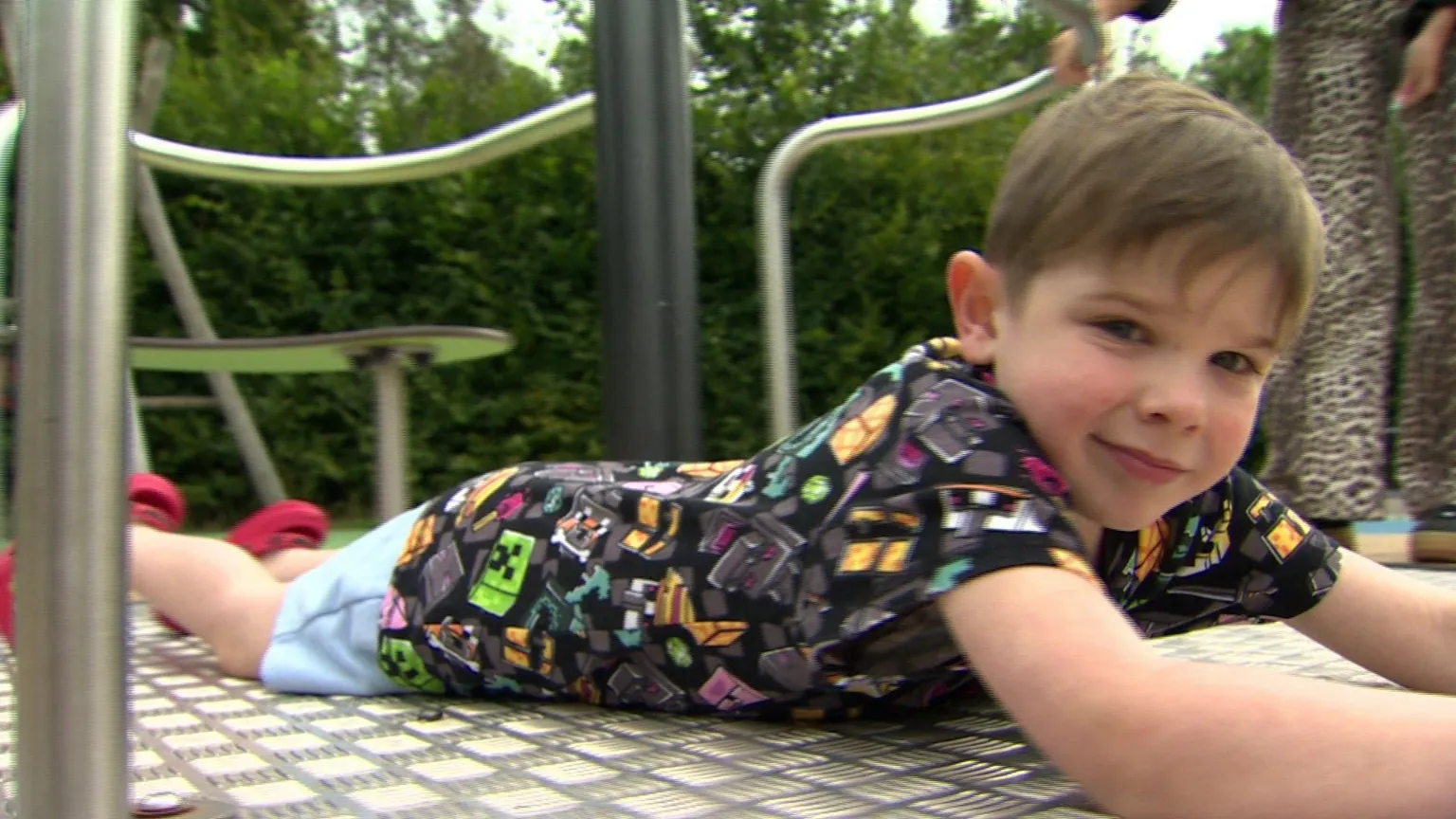

The mother of a six-year-old boy with autism and severe learning disabilities says she has been left “shaking” and “intimidated” after authorities placed her son on the Child Protection Register (CPR).
Danielle McQuillan said she cannot understand why officials registered her son, Zac, after she asked for more overnight respite care to help her manage his complex needs and spend more time with her two daughters.
Zac is non-verbal, and McQuillan says his behaviour can be extremely challenging. She said he sometimes removes his clothes and runs away when they are outside.
The South Eastern Health and Social Care Trust, which placed Zac on the register, said it could not publicly discuss the details of individual children or families.
The Child Protection Register lists children authorities believe face a risk of significant harm. Once a child joins the register, social workers typically make unannounced home visits to observe the family’s day-to-day circumstances.
Eamonn McNally, a senior lawyer at the Children’s Law Centre, said his organisation increasingly sees authorities use the Child Protection Register in cases involving children with complex disabilities and additional needs, even when families say the children do not face a protection risk.
Why Was Zac Placed on the Register?
McQuillan lives in Bangor, County Down, with Zac and her two daughters. She said Zac enjoys sensory play, structured routines and spending time outdoors, but his needs make everyday life difficult.
She said he refuses to wear his own clothes and often bolts when the family goes out. With two other children to care for, McQuillan said she struggles to balance Zac’s needs with those of his sisters.
“I’ve been trying to get some overnight respite as I want to be a mum to my girls as well as Zac,” she said.
McQuillan said she requested respite care so she could do ordinary activities with her daughters, including going to the cinema and spending quality time together.
Authorities offered Zac one night of respite care each month in Newcastle, County Down.
McQuillan said the arrangement would not work because the location was too far away for a single night. She also said the long journey disrupted Zac’s routine and made his behaviour more difficult when he returned home.
While discussing her need for respite with a social worker, McQuillan said a disagreement developed.
“They said: ‘We can’t parent your child more than we already do.’”
She said the comment upset her because she works hard to care for her son.
“I was upset and crying and, the next day, two social workers came round and told me they were holding a child safeguarding conference with a view to putting him on the register.”
Mother Describes “Stress and Anxiety”
Authorities organise a child safeguarding conference when they believe a child may face significant harm.
The process usually brings together agencies such as social services, healthcare professionals and schools to share information, assess concerns and determine what action may protect the child.
Seventeen health and education professionals attended Zac’s conference, according to McQuillan.
She said authorities allowed her to have only one person represent her at the meeting. Eamonn McNally of the Children’s Law Centre represented her.
The professionals then voted on whether to place Zac on the Child Protection Register. They voted in favour.
“I didn’t understand why. I was trying to get my head around it,” McQuillan said.
She said the decision also made her question whether she had failed as a parent.
“It’s difficult to deal with,” she said.
McQuillan said social workers have since made unannounced visits to her home.
“I just feel like I’m being watched for a reason that I don’t know.”
On one occasion, she said she took Zac to McDonald’s and returned to find two social workers parked outside her home.
“I was shaking, I felt so intimidated,” she said.
McQuillan believes authorities are now searching for reasons to justify Zac’s registration.
She also said families can feel that social services have overstepped their role when authorities place a child on the register.
“You have people coming into your home checking you out,” she said.
“That doesn’t actually add anything to the family. In fact, it takes away from the time that they have with their child.”
She described her experience as “disgraceful and completely shocking”.
Children’s Law Centre Calls for Review
McNally said the Children’s Law Centre currently supports several families with significant needs who face extreme pressure and burnout because they lack adequate services and support.
He argued that authorities should respond to such circumstances by providing additional family support rather than automatically placing children on the Child Protection Register.
“That shouldn’t equate to a registration on the child protection register. That should equal support being put in place to keep that family together,” McNally said.
He said there are no reliable statistics showing how many families face similar situations.
However, he pointed to a review of children’s services published four years ago, which found that Northern Ireland had the highest rate of child protection referrals and registrations per head of population among the UK’s nations.
McNally said Professor Ray Jones, who led the review, questioned whether some families were entering the child protection system when they might instead need a family-support approach.
The Children’s Law Centre has called for authorities to review the process used to place children on the Child Protection Register. The organisation described the current system as outdated and “not fit for purpose”.
“The entire system needs looked at,” McNally said. “It needs to be more child-focused and family friendly.”
The NSPCC said the Child Protection Register helps relevant agencies, including emergency responders and schools, identify whether a child they work with is known to face a risk of harm.
South Eastern Trust Responds
The South Eastern Health and Social Care Trust said it welcomed scrutiny of child protection procedures involving children with special educational needs.
The trust said its Children’s Disability Team supports 740 families in the community, while fewer than 10 families currently receive support through its Child Protection process.
The trust said it works directly with families and their advocates to resolve concerns but cannot publicly discuss individual children or families.
It also said families have access to appropriate appeals and representation processes to raise concerns, with organisations such as the Children’s Law Centre able to provide support.