
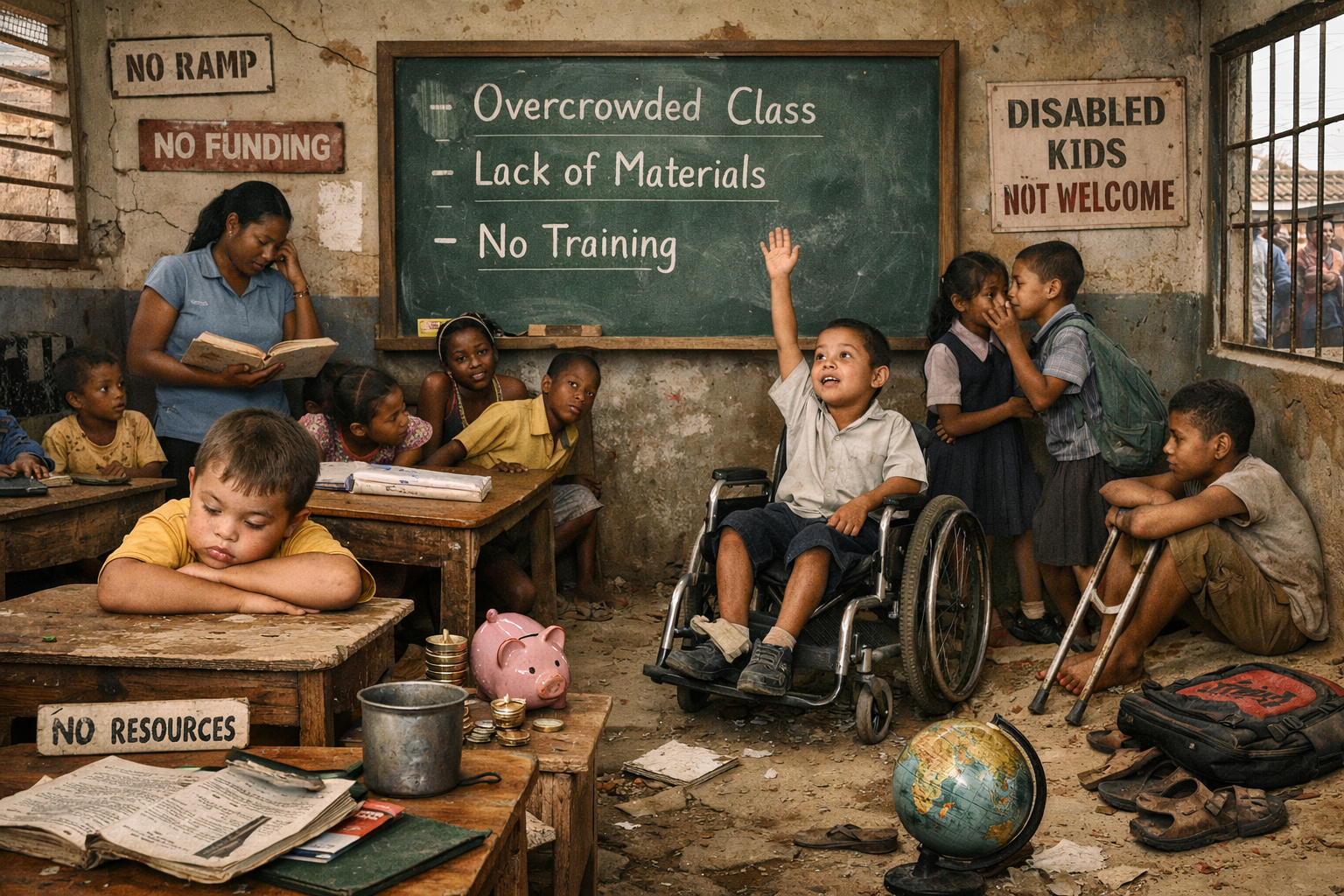

Inclusive education is a globally recognized approach that seeks to ensure all learners, regardless of ability, background, or socio-economic status have equitable access to quality education within mainstream learning environments. Rooted in principles of equity, participation, and respect for diversity, inclusive education aligns with international frameworks such as the UNESCO agenda on Education for All and the Sustainable Development Goals (SDG 4). Despite its importance, many developing countries continue to face significant barriers that hinder the effective implementation of inclusive education systems.
One of the most prominent challenges is inadequate policy implementation. While many nations have adopted policies that support inclusion, there is often a gap between policy formulation and practical execution. Weak institutional frameworks, limited monitoring mechanisms, and insufficient funding contribute to ineffective implementation. In some cases, inclusive education policies exist only on paper, without clear strategies for teacher training, curriculum adaptation, or resource allocation.
Another critical barrier is the lack of trained personnel. Inclusive education requires teachers who are equipped with specialized skills to support diverse learners, including those with disabilities such as Autism Spectrum Disorder, Cerebral Palsy, and Down Syndrome. However, many educators in developing countries lack adequate training in special education methodologies, differentiated instruction, and behavior management. This often results in ineffective teaching practices and reduced learning outcomes for students with additional needs.
Limited infrastructure and resources also pose a major constraint. Many schools lack basic facilities such as ramps, accessible toilets, assistive technologies, and learning materials tailored to diverse learners. Overcrowded classrooms further exacerbate the situation, making it difficult for teachers to provide individualized attention. The absence of supportive learning environments discourages the participation of students with disabilities and other marginalized groups.
Socio-cultural attitudes and stigma remain deeply rooted in many communities. Negative perceptions about disability often lead to discrimination, exclusion, and low expectations for affected learners. In some cases, families may be reluctant to enroll children with special needs in school due to fear of social rejection or lack of awareness about their educational rights. These attitudes significantly undermine efforts to promote inclusion.
Economic challenges also play a significant role. Many developing countries operate under constrained budgets, prioritizing other sectors over education. Even within the education sector, funding for inclusive practices is often limited. Families living in poverty may struggle to afford transportation, assistive devices, or specialized support services, further limiting access to education for children with disabilities.
Additionally, curriculum rigidity presents another barrier. Standardized curricula and assessment systems often fail to accommodate diverse learning needs. Without flexible teaching approaches and adaptive assessment methods, students who require alternative learning strategies are left behind. This rigid system contradicts the fundamental principles of inclusion, which emphasize adaptability and learner-centered instruction.
The lack of data and research on inclusive education further complicates the issue. Reliable data on the number of children with disabilities, their educational needs, and school attendance rates are often unavailable or outdated. This makes it difficult for policymakers to design targeted interventions or measure progress effectively.
Finally, weak collaboration among stakeholders limits progress. Inclusive education requires coordinated efforts among governments, educators, families, healthcare professionals, and communities. However, in many developing countries, there is insufficient collaboration and communication among these groups, leading to fragmented and ineffective interventions.
In conclusion, while inclusive education remains a vital goal for developing nations, numerous barriers continue to impede its realization. Addressing these challenges requires a holistic approach that includes strengthening policy implementation, investing in teacher training, improving infrastructure, combating stigma, and fostering collaboration among stakeholders. By prioritizing inclusive practices, developing countries can move closer to achieving equitable and quality education for all learners, thereby promoting social inclusion and sustainable national development.