


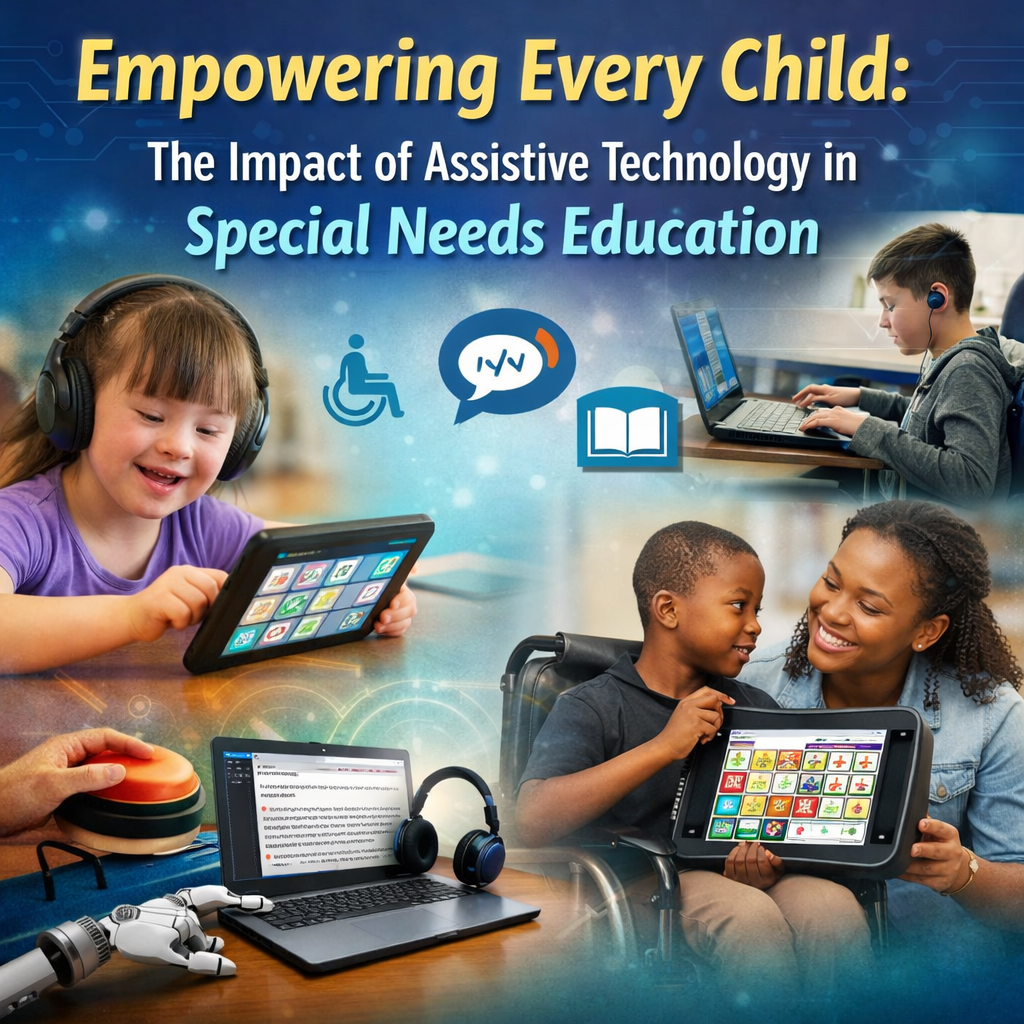


For many children living with disability, learning has never been a level playing field. A child who cannot speak, read, write, or move easily often finds the classroom overwhelming. But today, a quiet revolution is happening, assistive technology is changing everything.
From simple tools to advanced digital devices, assistive technology is helping children with disabilities learn, communicate, and thrive in ways that were once impossible.
What Is Assistive Technology?
Assistive technology simply means any tool, device, or software that helps a person with a disability perform tasks more easily.
It can be as basic as a pencil grip or as advanced as a tablet that speaks for a non-verbal child.
These tools are not just helpful, they are life-changing.
Giving Children a Voice
One of the most powerful impacts of assistive technology is communication.
For children with autism, cerebral palsy, or speech disorders, talking can be a major challenge. Augmentative and Alternative Communication (AAC) devices, like picture boards and speech-generating tablets, allow these children to express their thoughts, needs, and emotions.
Imagine a child who has never been able to say “I’m hungry” or “I’m happy” suddenly communicating with a tap on a screen. For parents and teachers, it can feel like hearing their child’s voice for the first time.
Making Learning Possible
For children with dyslexia or learning disabilities, reading and writing can be frustrating. Assistive tools such as text-to-speech apps, audiobooks, and speech-to-text software help these learners access information without being limited by their challenges.
Instead of struggling with a page of text, they can listen, dictate answers, and participate like their peers.
Supporting Physical Disabilities
Children with physical impairments also benefit greatly from assistive technology. Adaptive keyboards, switches, eye-tracking devices, and touch screens allow them to write, draw, and use computers, even if they cannot use their hands traditionally.
These tools help them participate in class, complete assignments, and explore the digital world independently.
Building Confidence and Independence
Beyond academics, assistive technology boosts self-esteem and independence. When children can communicate, learn, and participate, they feel capable and included.
Teachers also report better engagement, reduced frustration, and improved classroom behavior when assistive tools are used appropriately.
The Reality in Nigeria and Africa
While assistive technology is growing globally, access remains limited in many parts of Africa. High costs, lack of awareness, and limited training for teachers and caregivers are major barriers.
Yet, there is hope. Low-cost apps, smartphones, locally made communication boards, and community initiatives are helping bridge the gap. Advocacy platforms like ViveOClock are also raising awareness and empowering parents and educators.
Looking Ahead
The future of a person living with disabilities is deeply connected to technology. Artificial intelligence learning apps, smart wearables, and personalized digital learning tools are already emerging.
With the right support, policy, and awareness, assistive technology can ensure that no child is left behind, not because of disability, but because of lack of access.
Final Thoughts
Assistive technology is not a luxury.
It is a right, a bridge, and a voice for children who have been silent for too long.
At ViveOClock, we believe that every child deserves the tools to learn, communicate, and shine, because disability should never mean inability.