
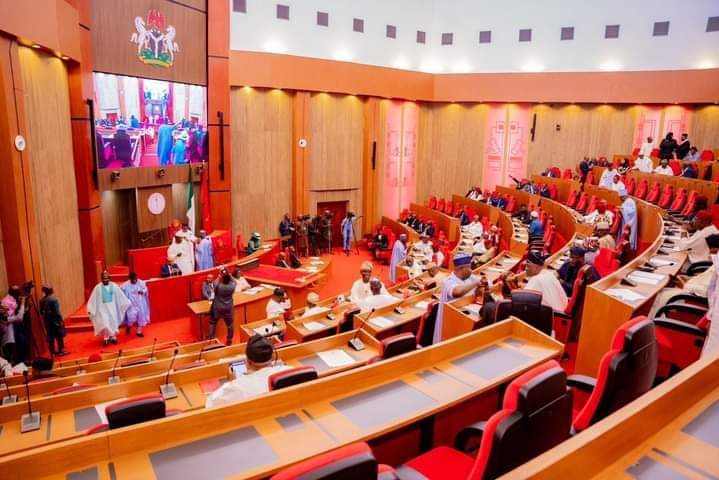

The Senate on Thursday commenced deliberations on a Bill proposing the establishment of a National Centre for Autism, alongside six zonal centres across the country, to strengthen research, diagnosis and care for persons living with Autism Spectrum Disorder (ASD).
ASD is a neurodevelopmental condition that affects communication, social interaction and behaviour, with varying manifestations that make early diagnosis and targeted intervention critical for effective inclusion and development.
The proposed legislation, sponsored by Senator Natasha Akpoti-Uduaghan (Kogi Central), seeks to institutionalise early detection and intervention for both children and adults with autism, while also advancing public awareness, professional capacity building and nationwide inclusion.
Leading the debate on the general principles of the Bill, titled “An Act to Establish the National Centre for Autism and Six Zonal Centres for Autism Diagnosis, Research, Education, and Care; and for Related Matters,” Akpoti-Uduaghan described the initiative as long overdue and essential to Nigeria’s social welfare and public health framework.
She disclosed that the six zonal centres are proposed for Kaduna, Bauchi, Enugu, Port Harcourt, Ibadan and Abuja, covering all geopolitical zones of the country.
Referencing World Health Organisation data, the senator said one in every 100 children globally is diagnosed with autism, noting that Nigeria’s actual prevalence rate is likely higher due to limited awareness and inadequate diagnostic infrastructure.
She expressed concern that the absence of a coordinated national framework has forced families to confront autism-related challenges on their own, often relying on poorly equipped private facilities or seeking care abroad, an option largely inaccessible to most Nigerians.
According to her, the Bill aims to address this gap by creating a structured, accessible and inclusive federal response through the establishment of a National Centre for Autism and six zonal centres nationwide.
Under the proposal, the national headquarters will be located in Abuja and will coordinate research, training and policy development, while the zonal centres will operate within the North West, North East, South East, South South, South West and North Central regions. The centres are expected to provide diagnostic, therapeutic and educational services, function as referral hubs for state-level facilities and lead community-based awareness initiatives.
Akpoti-Uduaghan highlighted the social consequences of neglecting autism care, noting that many children with autism are often mislabelled as stubborn, mentally ill or possessed, resulting in stigma, abuse and long-term exclusion. She added that schools lack trained personnel, hospitals lack diagnostic tools and parents shoulder overwhelming emotional and financial burdens.
She said the Bill seeks to close these gaps by delivering a coordinated federal response to a developmental and public health challenge while ensuring equitable access to care across all regions of the country.
In her concluding remarks, the senator described the Bill as a matter of social justice and national responsibility, stressing that it reflects a commitment to recognising the value of every Nigerian, regardless of developmental differences.
The proposal received broad support from lawmakers across party lines, with several senators commending its focus on inclusion, institutional reform and public health advancement.
Senate President Godswill Akpabio subsequently referred the Bill to the Senate Committee on Health (Secondary and Tertiary) for further legislative action, directing the committee to consult relevant stakeholders and align the framework with Nigeria’s practical realities.
If enacted, the Bill would mark Nigeria’s first comprehensive federal legislation dedicated to autism diagnosis, care and inclusion.