
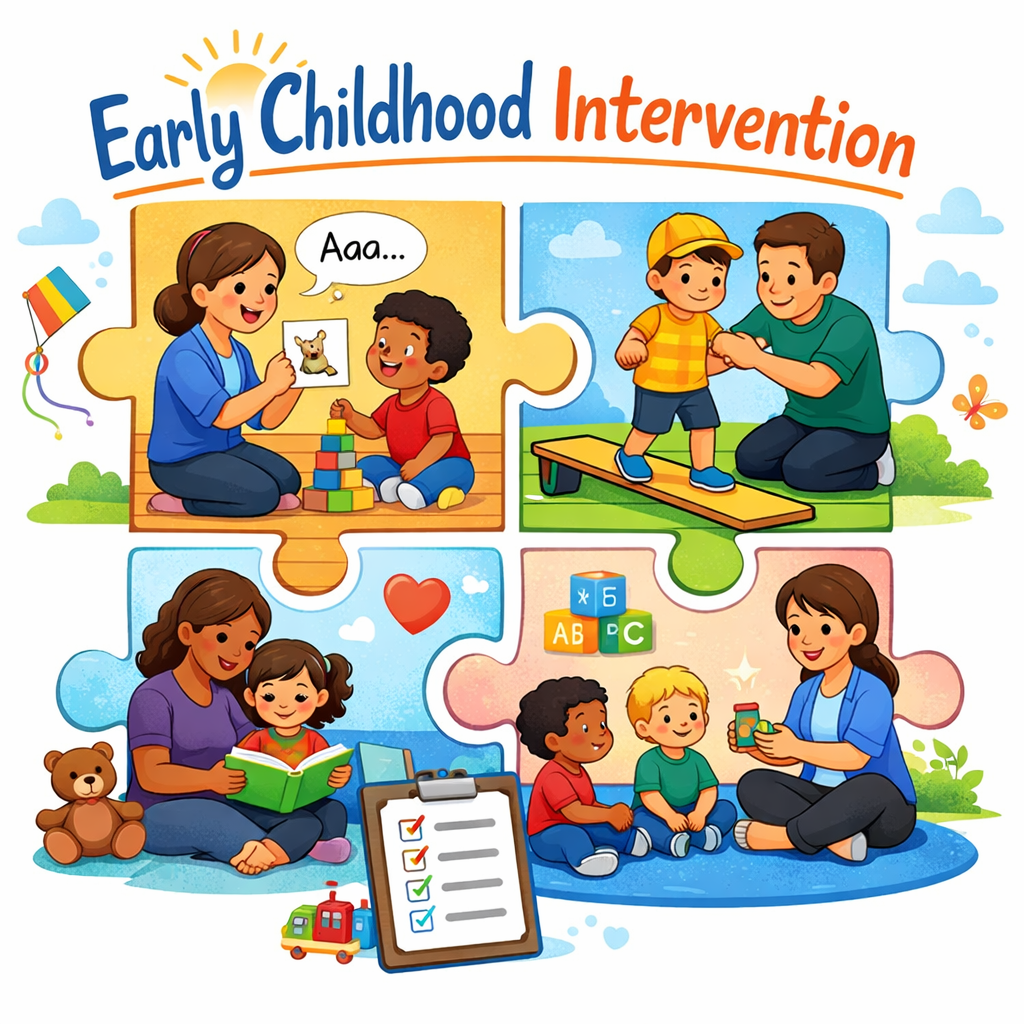

The first few years of a child’s life are powerful. In fact, they are foundational. During early childhood, the brain develops at a speed that will never be repeated again. Connections are formed, behaviours are shaped, and the building blocks for learning, communication, and emotional regulation are laid. When a child shows signs of developmental delay or disability during this critical window, early support can make an extraordinary difference.
Early Childhood Intervention (ECI) refers to specialized services and supports provided to infants and young children usually from birth to five years who have developmental delays, disabilities, or are at risk of developmental challenges. These services may include speech therapy, occupational therapy, physical therapy, behavioural support, special education, and family counselling. But beyond professional services, early intervention is about understanding a child’s needs and responding intentionally, consistently, and compassionately.
Research in neuroscience has shown that early experiences shape the structure of the developing brain. When children receive stimulation, through interaction, play, language exposure, and responsive caregiving, their neural pathways strengthen. For a child with speech delay, autism, cerebral palsy, or other developmental conditions, early targeted intervention helps create alternative pathways that support learning and independence.
Waiting too long can mean missed opportunities. The earlier support begins, the more flexible the brain is, and the greater the potential for improvement.
One of the strongest arguments for early intervention is prevention. Addressing developmental concerns early can reduce the severity of difficulties later in life. A child who receives speech therapy at age two may enter primary school with functional communication skills. A child who receives early behavioural support may develop coping strategies that prevent social isolation.
Without intervention, small delays can grow into larger academic, emotional, or behavioural struggles. Early action can reduce the need for more intensive and costly services in the future.
Early childhood intervention is not only about the child, it is about the family. Parents often feel anxious or confused when developmental concerns arise. Early intervention services guide families, teach them practical strategies, and help them understand their child’s strengths and needs.
When parents are equipped with knowledge and skills, they become confident advocates. They learn how to support communication at home, manage behaviours positively, and create structured routines that promote development. The home becomes an extension of therapy, and progress becomes more consistent.
Children who receive early support often show improved social skills, better emotional regulation, and stronger peer relationships. Early intervention teaches children how to communicate their needs, follow routines, and participate meaningfully in group settings.
These skills are not just academic, they influence self-esteem and independence. A child who can express themselves is less likely to become frustrated. A child who feels understood is more likely to thrive.
Early intervention begins with early identification. Parents, caregivers, teachers, and healthcare providers must pay attention to developmental milestones. Delays in speech, difficulty making eye contact, limited social interaction, delayed motor skills, or regression in abilities should not be ignored.
Screening and assessment are not labels, they are tools. Identifying a challenge early does not limit a child; it opens doors to support.
Communities, schools, healthcare systems, and governments all have a role to play in strengthening early childhood intervention systems. Access to affordable and quality services should not depend on geography or income level. Every child deserves the opportunity to reach their full potential.
Investing in early childhood intervention is not just a social responsibility; it is an economic one. When children receive early support, they are more likely to become independent, productive adults who contribute meaningfully to society.
In conclusion, early childhood intervention is about hope. It is about recognizing that delays do not define a child’s future. With timely support, patience, and collaborative effort, children with developmental challenges can make remarkable progress.
The early years are not just another stage of life, they are the foundation of life. When we support children early, we give them more than therapy. We give them opportunity, dignity, and a stronger start.